Harvest
Honey harvest tracking and batch traceability
ApiaryPilot links every kilo of honey back to the hives it came from: harvest records per colony, batches that combine them, moisture and quality checks, jar counts, and QR-coded labels customers can scan to see where their honey was produced.
Last updated
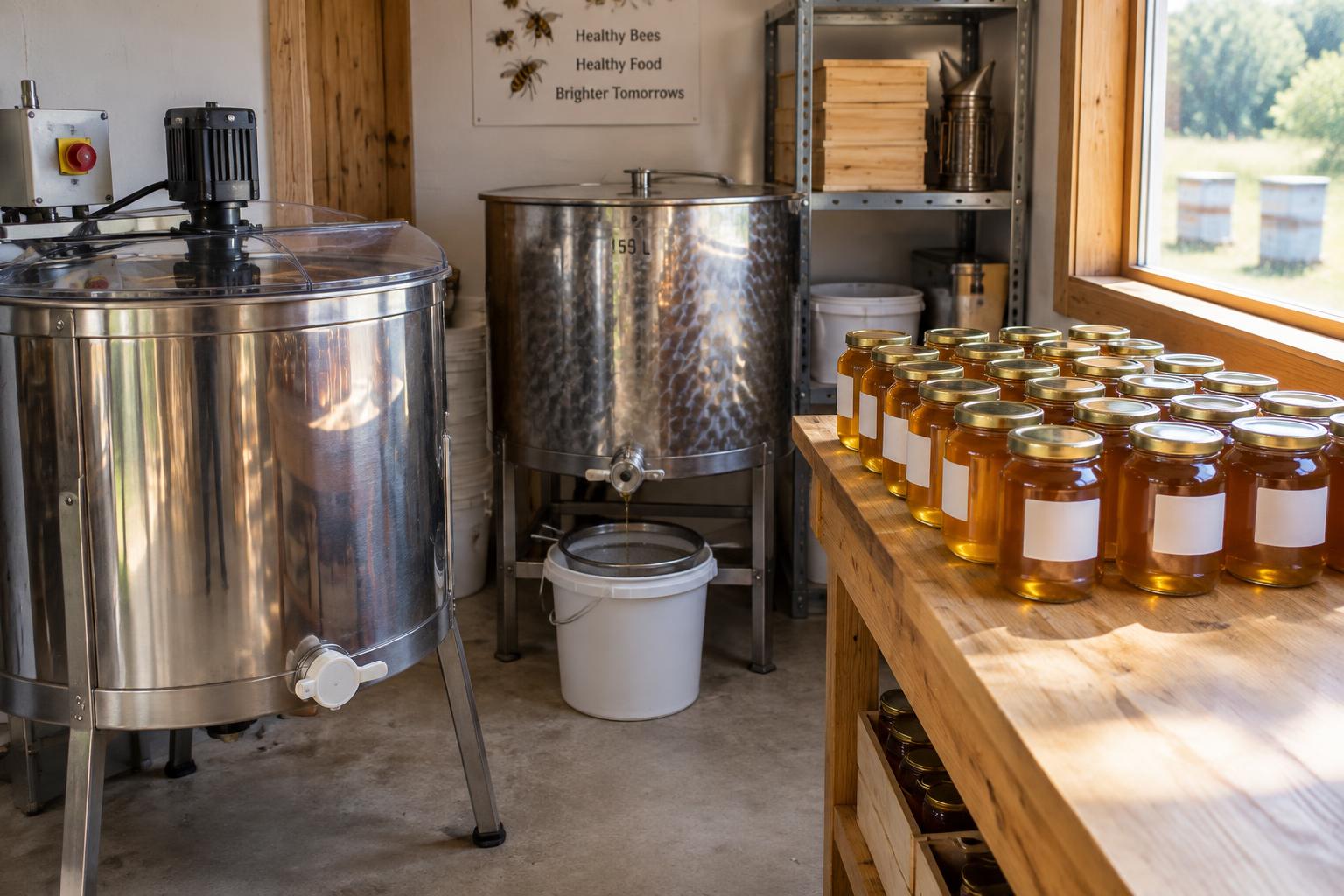
From frames to batch numbers
Harvest day is chaotic, and the details that matter for traceability are exactly the ones that get lost: which supers came off which hives, how much each colony produced, and which extraction run ended up in which bucket.
ApiaryPilot lets you log a harvest per hive as the supers come off — weight, number of frames, honey type and any notes — then combine those harvests into a batch when you extract. The batch keeps the list of contributing hives and apiaries, so the chain from jar back to colony is never broken.
Quality data worth recording
Water content decides whether honey is stable. Above roughly 18% moisture, fermentation becomes a real risk, and many national standards and buyers use that figure as a limit. ApiaryPilot stores a moisture reading per batch and warns you when it sits above the threshold, so a marginal batch is treated carefully rather than sold and forgotten.
Alongside moisture you can record honey type and floral source, extraction and bottling dates, filtering and settling notes, colour, and the number and size of jars produced. Together these form a production record you can defend to any buyer.
Traceability customers can actually check
Traceability is only convincing when it is visible. Every batch has a unique number, and the QR Label Studio prints it onto jar labels alongside your own branding. A customer at a market can scan the code and see the honey's origin, harvest period and type.
For buyers, shops and inspections you can generate a one-page traceability certificate per batch showing the contributing hives, harvest dates and quality figures. It takes one click, which matters when a wholesaler asks for it on a Friday afternoon.
Yields per hive and per apiary roll up into production reports, so you can see which sites earn their keep and which colonies consistently outperform — the kind of decision that is impossible on memory alone.
Records that hold up over the years
Because harvest records sit in the same system as inspections and treatments, a batch is connected to the full history of the colonies behind it. If a question ever arises about a treatment window, the answer is one lookup away.
Everything exports. Annual production summaries, batch lists and label data can leave ApiaryPilot as PDF or data files whenever you need them for accounting, for a food safety file, or simply for your own end-of-season review.
Questions
Frequently asked questions
What is honey batch traceability?
Batch traceability means each jar can be linked back to a defined production batch, and that batch back to the hives, apiaries and dates that produced it. In practice it means printing a batch number on the label and keeping a record that says exactly what went into it.
What moisture level should honey be below?
As a working rule, keep honey below about 18% water content; above that, fermentation risk rises sharply, and many buyers and national standards use 18 to 20% as a limit. ApiaryPilot records the reading per batch and flags anything over the threshold.
Can customers scan a QR code on my jars?
Yes. The QR Label Studio generates labels carrying your branding and a code tied to the batch, so a scan shows the honey's origin and harvest details rather than a generic page.
Does harvest tracking work for a few hives as well as hundreds?
Yes. A hobbyist with four hives can log a single harvest in under a minute; a commercial operator can record dozens of supers across apiaries and roll them into extraction batches. The same batch structure serves both.
Get started
Try it with your own hives
Start a 7-day free trial — no credit card needed. Plans start at €9 per month and include the full ApiaryPilot Academy.