Anatomy of a Beehive: A Visual Guide to Colony Structure
Explore the inner workings of a Langstroth beehive—from hive foundations and worker roles to honey production—through our detailed illustrated infographic.
About this anatomy of a beehive: a visual guide to colony structure infographic
This beekeeping infographic turns the key decisions behind anatomy of a beehive: a visual guide to colony structure into a visual reference that can be used during inspections, planning sessions, or training conversations. It is designed for practical apiary management, so each section highlights the observations, timing, and records that matter most in the field.
Use it as a quick reminder before opening colonies, preparing seasonal work, or reviewing hive notes with another beekeeper. For stronger records, keep the infographic beside your inspection journal and capture the matching hive data in ApiaryPilot, including dates, colony status, treatments, harvest actions, and follow-up tasks.
The download below is suitable for printing or sharing with a local beekeeping group. The embed code lets clubs, educators, and suppliers reference the infographic while linking back to the original ApiaryPilot guide page.
Understanding the structure of a beehive is fundamental to becoming a confident beekeeper. Every component—from the bottom board to the outer cover—plays a specific role in supporting a thriving colony. Our latest infographic breaks it all down visually.
What This Infographic Covers
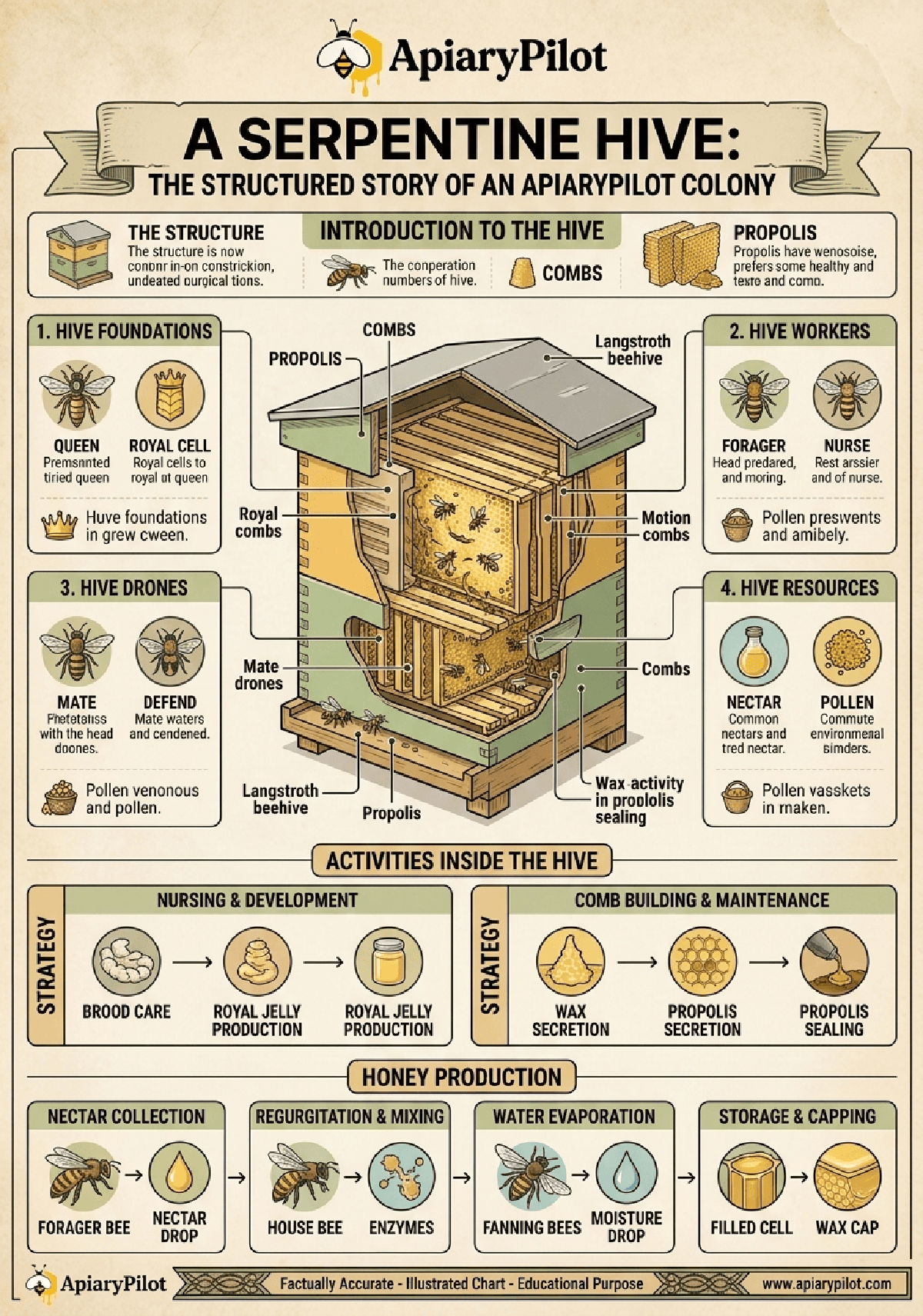
This illustrated guide walks you through the complete anatomy of a Langstroth beehive and the roles within a colony. It's designed as a quick-reference resource you can download and keep in your apiary toolkit.

Hive Foundations
The foundation of every colony starts with the queen. Royal cells signal queen-rearing activity, and the overall structure of the comb provides the scaffolding for brood, pollen storage, and honey reserves. Understanding how bees build and maintain their comb helps you make better management decisions during inspections.
Worker Roles
A healthy colony relies on a clear division of labour. Forager bees venture out to collect nectar and pollen, while nurse bees tend to the brood and maintain hive temperature. Each role is essential—when one group is disrupted, the entire colony feels the impact.
Hive Resources
Nectar and pollen are the two primary resources a colony collects. Nectar is processed into honey for energy, while pollen provides the protein needed for brood development. Monitoring these stores during inspections is one of the best indicators of colony health.
Honey Production Process
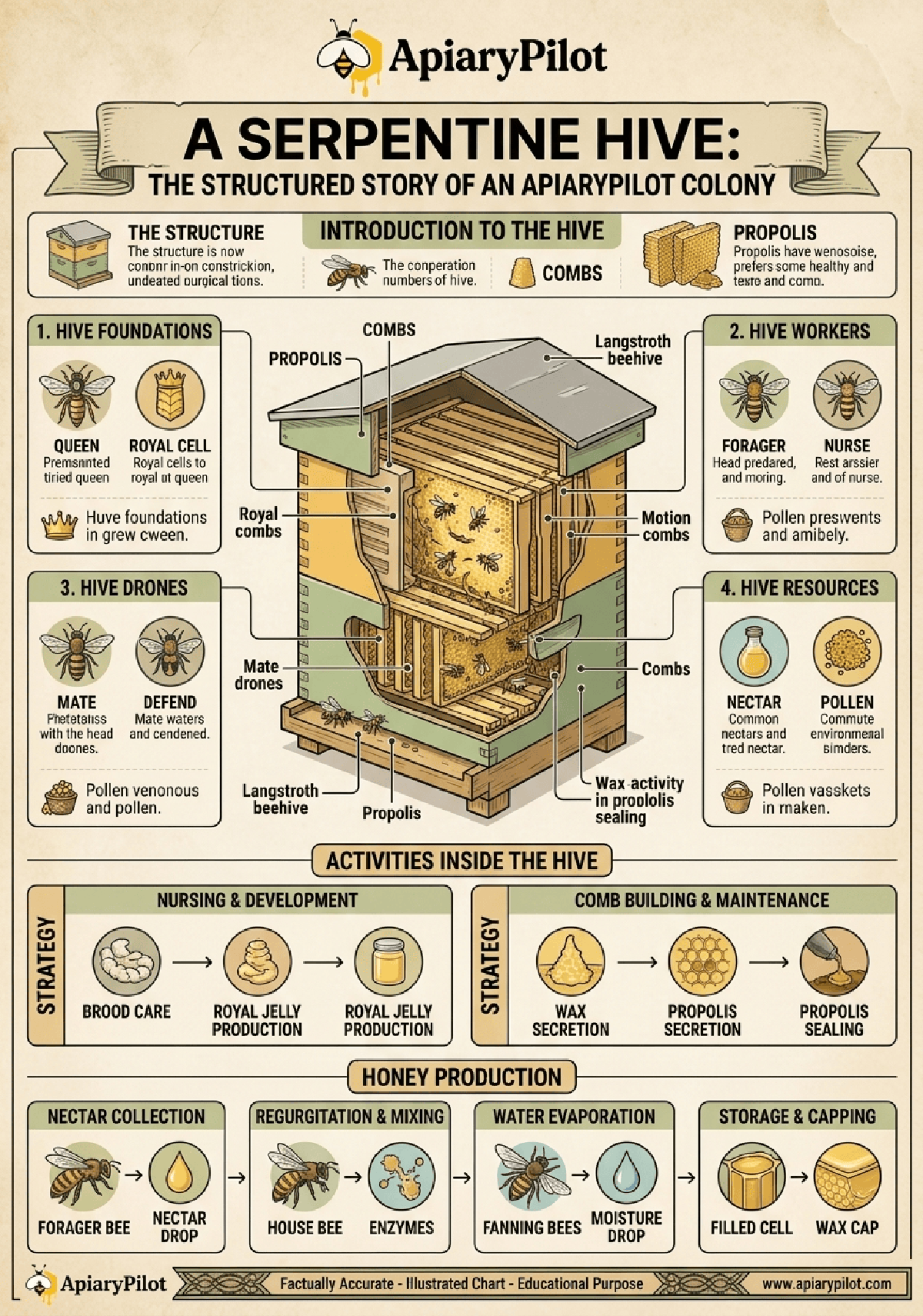
The journey from flower to jar is fascinating. Forager bees collect nectar and pass it to house bees, who mix it with enzymes. Fanning bees then reduce the moisture content until it reaches roughly 18%, at which point the cell is capped with wax. This is why monitoring moisture levels at harvest is so important—something ApiaryPilot tracks automatically for you.
Activities Inside the Hive
Beyond honey production, bees are constantly engaged in nursing and development—feeding larvae royal jelly—and comb building and maintenance, which involves wax secretion and propolis sealing. These activities are indicators you can observe during inspections to gauge colony vitality.
How to Use This Guide
Download the infographic and keep it handy during your next inspection. It's especially useful for new beekeepers learning to identify what they're seeing inside the hive, or for experienced beekeepers training helpers and apprentices.
Ready to put this knowledge into practice? ApiaryPilot helps you log inspections, track hive health, and monitor your colonies with precision—so you can spend less time on paperwork and more time with your bees.
Ready to elevate your beekeeping?
Start tracking your hives, inspections, and harvests with ApiaryPilot — the modern hive management platform built for beekeepers like you.
Get started free