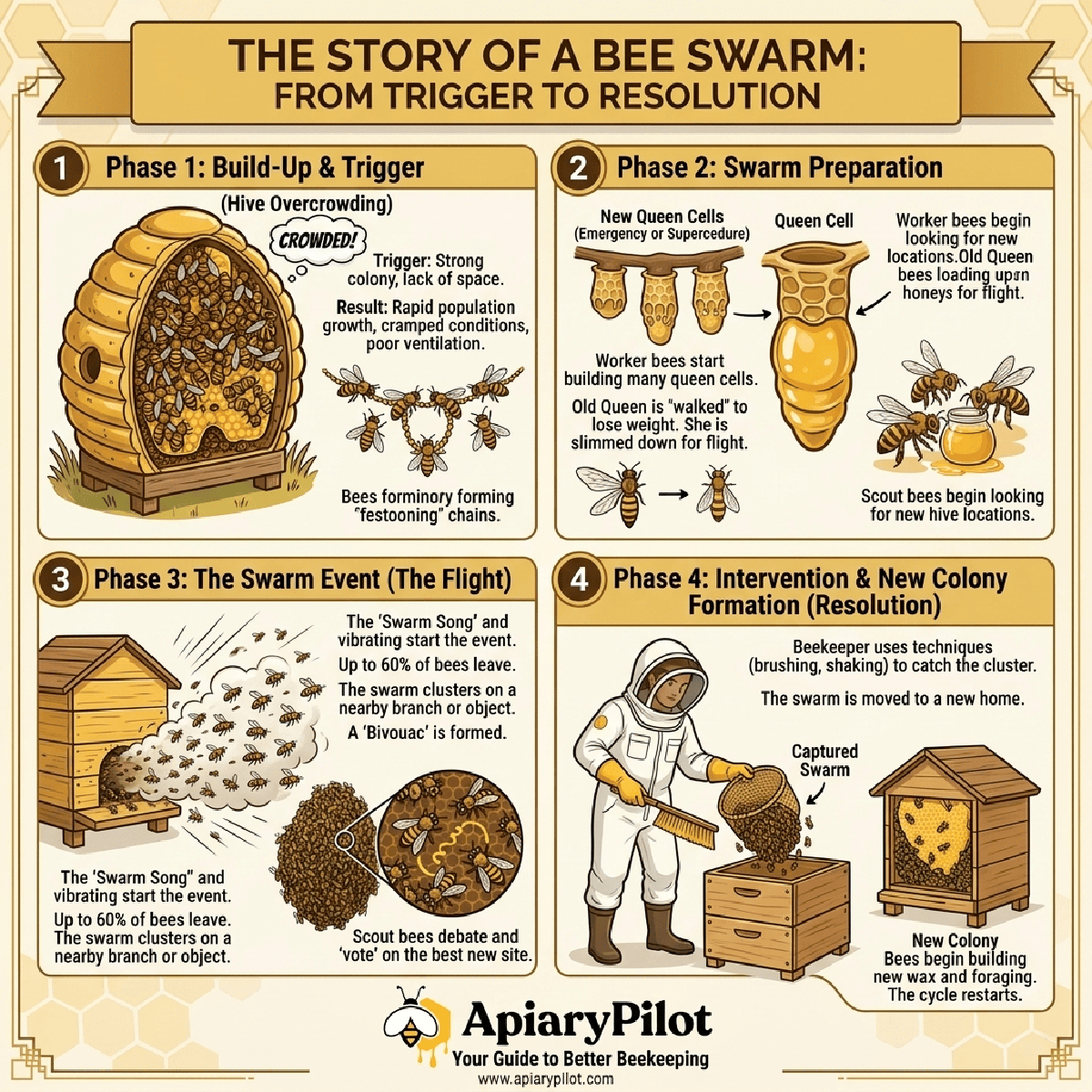
The Story of a Bee Swarm: From Trigger to Resolution
Understand the complete swarming process — from overcrowding triggers to queen cell construction, the dramatic swarm flight, and how beekeepers can intervene to capture and rehome a swarm.
About this the story of a bee swarm: from trigger to resolution infographic
This beekeeping infographic turns the key decisions behind the story of a bee swarm: from trigger to resolution into a visual reference that can be used during inspections, planning sessions, or training conversations. It is designed for practical apiary management, so each section highlights the observations, timing, and records that matter most in the field.
Use it as a quick reminder before opening colonies, preparing seasonal work, or reviewing hive notes with another beekeeper. For stronger records, keep the infographic beside your inspection journal and capture the matching hive data in ApiaryPilot, including dates, colony status, treatments, harvest actions, and follow-up tasks.
The download below is suitable for printing or sharing with a local beekeeping group. The embed code lets clubs, educators, and suppliers reference the infographic while linking back to the original ApiaryPilot guide page.
Swarming is one of the most dramatic and natural events in beekeeping. It's how honey bee colonies reproduce at the colony level — splitting into two groups to establish a new home. Understanding each phase helps beekeepers anticipate, manage, and even benefit from swarms.

Phase 1: Build-Up & Trigger
Swarming begins with success. A strong, healthy colony grows rapidly in spring, and the hive becomes overcrowded. Key triggers include:
- Lack of space – The brood nest is full, and there's no room for the queen to lay
- Poor ventilation – Overcrowding leads to heat buildup and reduced air circulation
- Congestion pheromones – When bees can't easily distribute the queen's pheromone through the colony, workers interpret this as a signal to swarm
You'll notice bees forming "festooning" chains — linking legs together — as they prepare wax for queen cells. This is an early visual indicator that swarming preparations have begun.
Phase 2: Swarm Preparation
Once the colony commits to swarming, workers begin building multiple queen cells along the bottom edges of frames. These peanut-shaped cells will house the future queens for the remaining colony.
Meanwhile, the old queen undergoes a remarkable transformation:
- Workers reduce her feeding, causing her to lose weight and slim down for flight
- She transitions from a heavy, egg-laying queen to one light enough to fly
- Scout bees begin leaving the hive to search for potential new nesting sites
Phase 3: The Swarm Event (The Flight)
The swarm event itself is dramatic. It often begins with the "Swarm Song" — a distinctive piping and vibrating sound. Then:
- Up to 60% of the colony's bees pour out of the hive entrance
- The old queen leaves with them
- The swarm clusters on a nearby branch, fence post, or other object, forming a bivouac — a temporary resting cluster
- Scout bees perform waggle dances on the surface of the cluster, debating and "voting" on the best new home site
This bivouac stage can last from a few hours to several days, giving beekeepers a window of opportunity to capture the swarm.
Phase 4: Intervention & New Colony Formation
An experienced beekeeper can capture a swarm using simple techniques:
- Brushing or shaking the cluster into a box or nuc hive
- Placing the box near the cluster and letting bees march in
- Ensuring the queen is captured — once she's in the box, the rest will follow
The captured swarm is then moved to a new hive, where the bees immediately begin building new wax comb, foraging for resources, and the queen resumes laying eggs. A new colony is born.
Prevention Is Better Than Capture
While capturing swarms is rewarding, preventing unwanted swarms protects your honey harvest. Key prevention strategies include:
- Adding supers early to give the colony room to expand
- Regular inspections every 7–10 days during swarm season (April–June)
- Splitting strong colonies before they decide to swarm on their own
- Removing queen cells during inspections (though this only delays, not prevents)
Track Swarm Activity with ApiaryPilot
ApiaryPilot lets you log swarm events, record queen cell sightings during inspections, and set reminders for weekly swarm-season checks. Over time, you'll identify which colonies are most swarm-prone and adjust your management strategies accordingly.
Ready to elevate your beekeeping?
Start tracking your hives, inspections, and harvests with ApiaryPilot — the modern hive management platform built for beekeepers like you.
Get started free