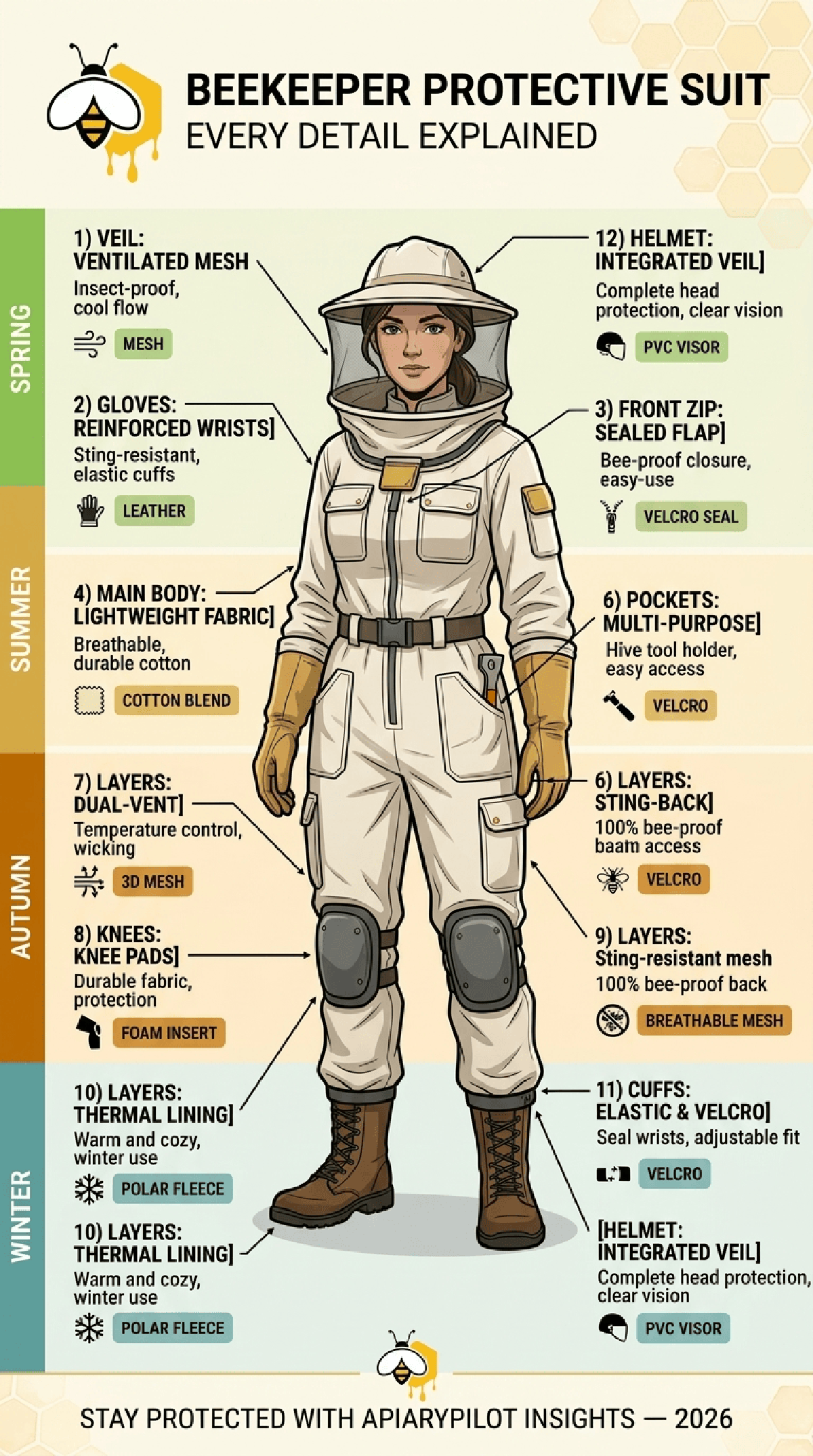
Beekeeper Protective Suit: Every Detail Explained
A complete visual breakdown of the modern beekeeper's protective suit — from ventilated mesh veils and reinforced gloves to thermal winter linings. Learn what every component does and why it matters across all four seasons.
About this beekeeper protective suit: every detail explained infographic
This beekeeping infographic turns the key decisions behind beekeeper protective suit: every detail explained into a visual reference that can be used during inspections, planning sessions, or training conversations. It is designed for practical apiary management, so each section highlights the observations, timing, and records that matter most in the field.
Use it as a quick reminder before opening colonies, preparing seasonal work, or reviewing hive notes with another beekeeper. For stronger records, keep the infographic beside your inspection journal and capture the matching hive data in ApiaryPilot, including dates, colony status, treatments, harvest actions, and follow-up tasks.
The download below is suitable for printing or sharing with a local beekeeping group. The embed code lets clubs, educators, and suppliers reference the infographic while linking back to the original ApiaryPilot guide page.
Your protective suit is your most important piece of beekeeping equipment. Understanding every component helps you choose the right gear, maintain it properly, and stay safe in the apiary year-round. This infographic breaks down 12 key features of a modern beekeeper's suit across all four seasons.
Head Protection
1. Veil: Ventilated Mesh
The veil is your first line of defence. Made from fine insect-proof mesh, it provides clear visibility while keeping bees away from your face and neck. Good ventilation is critical — a well-designed veil allows cool airflow to prevent overheating during summer inspections.
Material: Fine mesh fabric Key feature: Insect-proof with maximum airflow
12. Helmet: Integrated Veil
The helmet provides complete head protection with a rigid structure that keeps the veil away from your face. A clear PVC visor at the front offers unobstructed vision while the integrated design ensures there are no gaps where bees can enter.
Material: PVC visor with mesh surround Key feature: Complete head coverage with clear sightlines
Upper Body
2. Gloves: Reinforced Wrists
Sting-resistant gloves with elastic cuffs at the wrists prevent bees from crawling up your sleeves. Leather construction offers durability while maintaining enough flexibility for delicate frame handling.
Material: Leather Key feature: Elastic cuffs seal the gap between glove and sleeve
3. Front Zip: Sealed Flap
The front zipper features a bee-proof closure with a Velcro-sealed flap that covers the zip teeth. This double-seal design ensures no bees can find their way through the opening, while still allowing easy on-and-off access.
Material: Heavy-duty zip with Velcro seal Key feature: Bee-proof double closure
Seasonal Adaptations
Spring: Ventilation & Flexibility
Spring inspections require gear that handles variable temperatures. The ventilated mesh veil and lightweight upper body allow comfortable working during cool mornings that warm up quickly.
Summer: Breathability First
#### 4. Main Body: Lightweight Fabric
The suit body uses breathable cotton blend fabric that's durable enough to resist stings but light enough to prevent heat exhaustion during extended summer inspections.
Material: Cotton blend Key feature: Breathable and durable
#### 6. Pockets: Multi-Purpose
Strategically placed pockets with Velcro closures hold your hive tool, marker pens, and queen cages. Easy access means you don't have to put down frames to find your equipment.
Autumn: Reinforced Protection
#### 7. Layers: Dual-Vent
As colonies become more defensive in autumn, the dual-vent layer system provides temperature control with wicking properties, keeping you comfortable while offering enhanced sting protection.
Material: 3D mesh Key feature: Temperature regulation and moisture wicking
#### 8. Knees: Knee Pads
Built-in knee pads with foam inserts protect your knees during ground-level inspections and hive maintenance work that's common during autumn preparation.
#### 9. Sting-Back Layers
Additional sting-resistant mesh layers across the back provide 100% bee-proof coverage, critical when working with more defensive autumn colonies.
Material: Breathable mesh Key feature: Full sting protection without sacrificing airflow
Winter: Thermal Protection
#### 10. Layers: Thermal Lining
Winter inspections are brief but still require protection. A polar fleece thermal lining keeps you warm during quick checks without adding excessive bulk.
Material: Polar fleece Key feature: Warmth without restricting movement
#### 11. Cuffs: Elastic & Velcro
Adjustable wrist cuffs with combined elastic and Velcro closures ensure a secure seal regardless of the gloves you're wearing — from thin leather summer gloves to insulated winter pairs.

Choosing the Right Suit
When selecting your protective suit, consider:
- Climate: Hot regions benefit from ventilated suits; cold areas need thermal options
- Hive temperament: Gentle colonies may only need a jacket and veil; defensive bees require full suits
- Frequency of use: Professional beekeepers should invest in premium, durable materials
- Fit: A suit that's too tight restricts movement; too loose and bees can sting through bunched fabric
Maintain Your Gear with ApiaryPilot
Use ApiaryPilot's apiary management software to log equipment condition, set replacement reminders for worn gloves and veils, and track which protective gear works best for each of your apiaries. Proper gear maintenance is part of good apiary management.
Ready to elevate your beekeeping?
Start tracking your hives, inspections, and harvests with ApiaryPilot — the modern hive management platform built for beekeepers like you.
Get started free