The Beekeeping Year: A Month-by-Month Checklist for Healthy Hives
A practical seasonal guide covering every month of the beekeeping calendar — from spring inspections to winter preparation — so you never miss a critical task.
About this the beekeeping year: a month-by-month checklist for healthy hives infographic
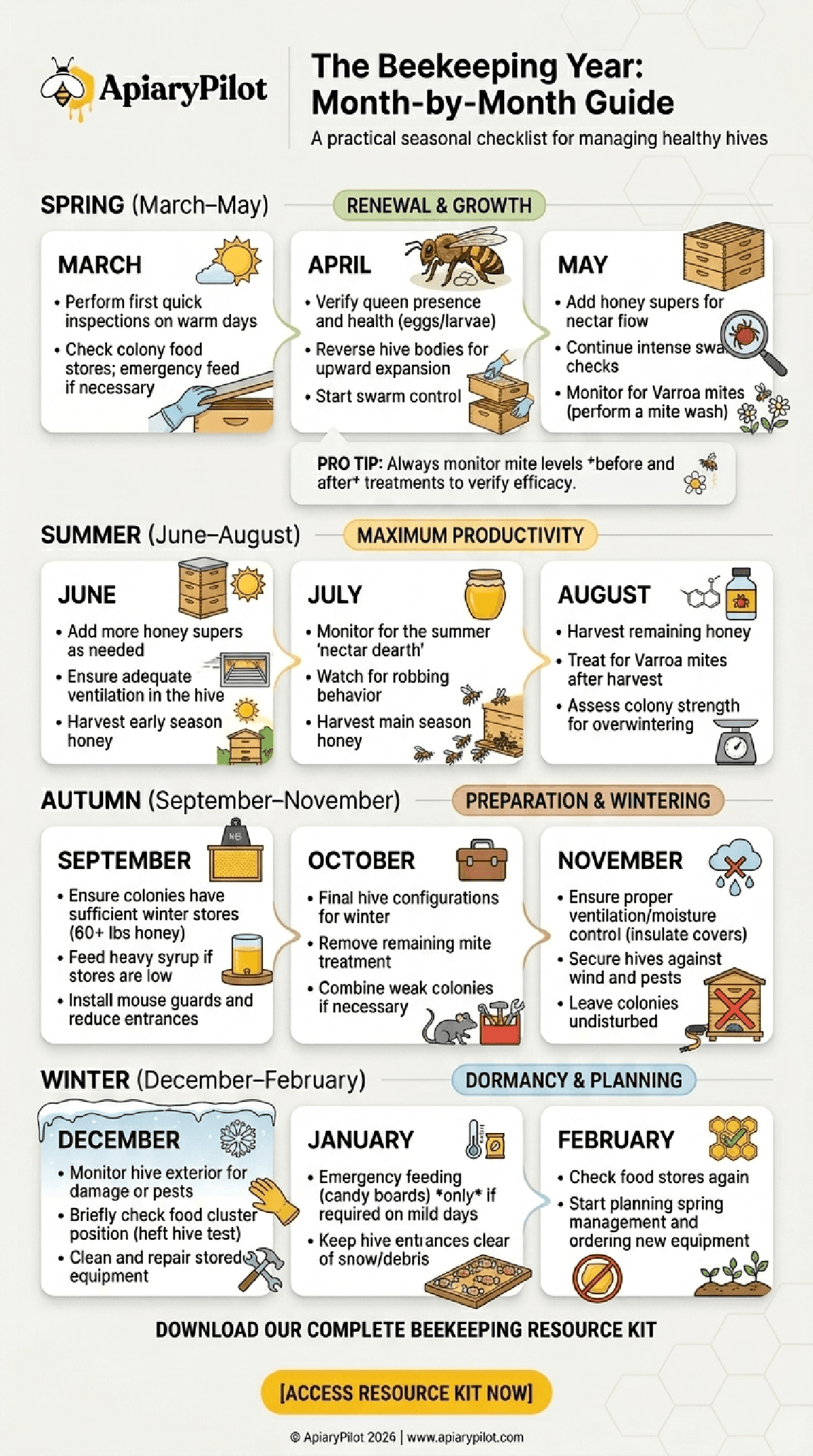
This beekeeping infographic turns the key decisions behind the beekeeping year: a month-by-month checklist for healthy hives into a visual reference that can be used during inspections, planning sessions, or training conversations. It is designed for practical apiary management, so each section highlights the observations, timing, and records that matter most in the field.
Use it as a quick reminder before opening colonies, preparing seasonal work, or reviewing hive notes with another beekeeper. For stronger records, keep the infographic beside your inspection journal and capture the matching hive data in ApiaryPilot, including dates, colony status, treatments, harvest actions, and follow-up tasks.
The download below is suitable for printing or sharing with a local beekeeping group. The embed code lets clubs, educators, and suppliers reference the infographic while linking back to the original ApiaryPilot guide page.
Beekeeping is a year-round commitment, and knowing exactly what to do each month can mean the difference between thriving colonies and devastating losses. This visual checklist breaks the entire beekeeping year into four seasons and twelve actionable months.

Spring (March–May): Renewal & Growth
Spring is the most exciting time in the apiary. Your bees are emerging from their winter cluster and the queen is ramping up egg-laying.
- March – Perform your first quick inspections on warm days (above 10°C / 50°F). Check remaining food stores and emergency-feed with sugar syrup if they're light.
- April – Verify queen presence by looking for fresh eggs and larvae. Reverse brood boxes to encourage upward expansion and begin swarm prevention measures.
- May – Add honey supers as nectar flow begins. This is peak swarm season — perform weekly swarm checks and monitor for Varroa mites with a sugar roll or alcohol wash.
Pro tip: Always monitor mite levels before and after treatments to verify efficacy.
Summer (June–August): Maximum Productivity
Summer is harvest season, but it also demands vigilance against pests and resource management.
- June – Add more honey supers as needed. Ensure adequate ventilation in the hive to prevent overheating. Harvest early season honey if supers are capped.
- July – Monitor for the summer "nectar dearth" when few flowers bloom. Watch for robbing behavior between colonies. Harvest main season honey.
- August – Harvest any remaining honey. Treat for Varroa mites immediately after harvest. Assess colony strength and begin thinking about overwintering preparation.
Autumn (September–November): Preparation & Wintering
Autumn is all about ensuring your colonies have everything they need to survive winter.
- September – Ensure colonies have sufficient winter stores (at least 60+ lbs / 27+ kg of honey). Feed heavy syrup (2:1 sugar-to-water) if stores are low. Install mouse guards and reduce entrances.
- October – Finalize hive configurations for winter. Complete any remaining mite treatments. Combine weak colonies if necessary — one strong colony is better than two weak ones.
- November – Ensure proper ventilation and moisture control by adding insulated covers. Secure hives against wind and pests. Leave colonies undisturbed as they form their winter cluster.
Winter (December–February): Dormancy & Planning
Winter is your time to plan, maintain equipment, and monitor from the outside.
- December – Monitor hive exteriors for damage or pest activity. Briefly check food cluster position with the "heft test" (lift one side of the hive to feel weight). Clean and repair stored equipment.
- January – Emergency feeding with candy boards only if required on mild days. Keep hive entrances clear of snow and debris. Order new equipment and plan spring management.
- February – Check food stores again as the cluster begins consuming more. Start planning spring management strategies and ordering any new equipment.
Using ApiaryPilot to Stay on Schedule
ApiaryPilot's task management system lets you set up recurring seasonal reminders so you never miss a critical monthly task. Log each inspection, treatment, and harvest as you go — building a complete history of your colony management that helps you improve year after year.
Ready to elevate your beekeeping?
Start tracking your hives, inspections, and harvests with ApiaryPilot — the modern hive management platform built for beekeepers like you.
Get started free