Global Beekeeping Journey: Diverse Methods Around the World
Explore how beekeeping practices differ across continents — from structured European hives to traditional Asian methods and large-scale North American operations.
About this global beekeeping journey: diverse methods around the world infographic
This beekeeping infographic turns the key decisions behind global beekeeping journey: diverse methods around the world into a visual reference that can be used during inspections, planning sessions, or training conversations. It is designed for practical apiary management, so each section highlights the observations, timing, and records that matter most in the field.
Use it as a quick reminder before opening colonies, preparing seasonal work, or reviewing hive notes with another beekeeper. For stronger records, keep the infographic beside your inspection journal and capture the matching hive data in ApiaryPilot, including dates, colony status, treatments, harvest actions, and follow-up tasks.
The download below is suitable for printing or sharing with a local beekeeping group. The embed code lets clubs, educators, and suppliers reference the infographic while linking back to the original ApiaryPilot guide page.
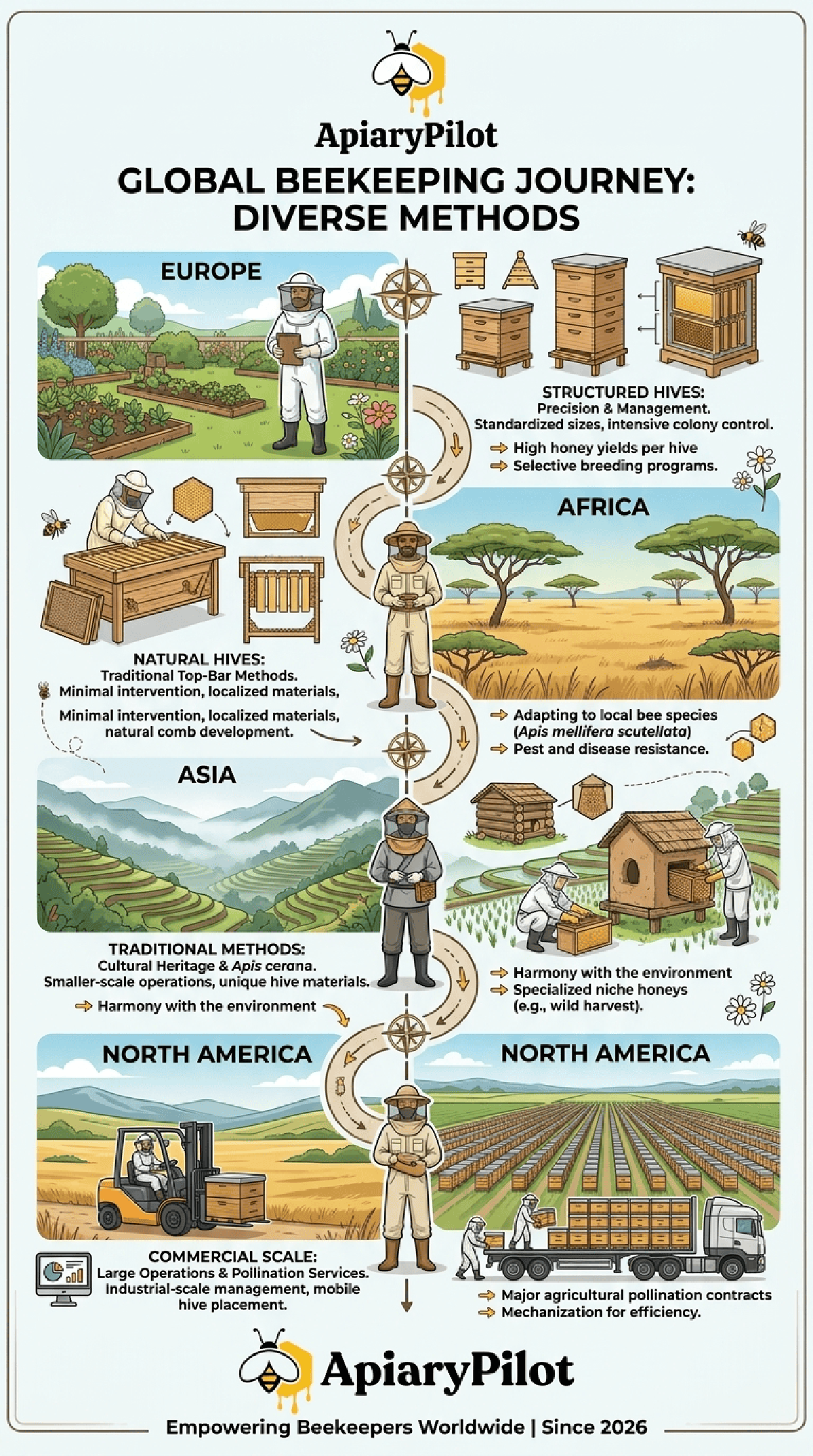
Beekeeping is a truly global practice, yet the methods and traditions vary dramatically from one continent to another. This infographic takes you on a visual journey across four major regions to understand how geography, culture, and local bee species shape the craft.
Europe: Precision & Structured Hives
European beekeeping is characterized by standardized hive sizes, intensive colony management, and selective breeding programs. Countries like Germany, France, and Slovenia have long histories of structured apiculture focused on maximizing honey yields per hive.
Key highlights: - Standardized Langstroth and Dadant hive designs - High honey yields through intensive management - Selective breeding programs for gentle, productive bees
Africa: Adapting to Local Species
African beekeeping often centers around Apis mellifera scutellata and traditional top-bar methods. Beekeepers work with locally adapted species that are naturally resistant to many pests and diseases, using minimal intervention and localized materials.
Key highlights: - Traditional top-bar hive methods - Natural comb development with minimal intervention - Strong pest and disease resistance in local bee populations
Asia: Cultural Heritage & Traditional Methods
In Asia, beekeeping with Apis cerana is deeply rooted in cultural heritage. Smaller-scale operations use unique hive materials and prioritize harmony with the environment, producing specialized niche honeys including wild harvest varieties.
Key highlights: - Cultural heritage tied to Apis cerana species - Smaller-scale, environmentally harmonious operations - Specialized niche honeys like wild harvest
North America: Commercial Scale Operations
North American beekeeping operates at an industrial scale, with large migratory operations providing essential pollination services to agriculture. Mechanization and mobile hive placement define this high-volume approach.
Key highlights: - Industrial-scale management and logistics - Major agricultural pollination contracts - Mechanization for maximum efficiency

What Can We Learn?
Each region's approach offers valuable lessons. European precision can improve yields, African resilience teaches us about sustainable genetics, Asian traditions remind us of our connection to nature, and North American scale shows what's possible with modern logistics.
Whether you manage two hives or two thousand, understanding global practices can inspire better, more sustainable beekeeping in your own apiary.
Ready to elevate your beekeeping?
Start tracking your hives, inspections, and harvests with ApiaryPilot — the modern hive management platform built for beekeepers like you.
Get started free