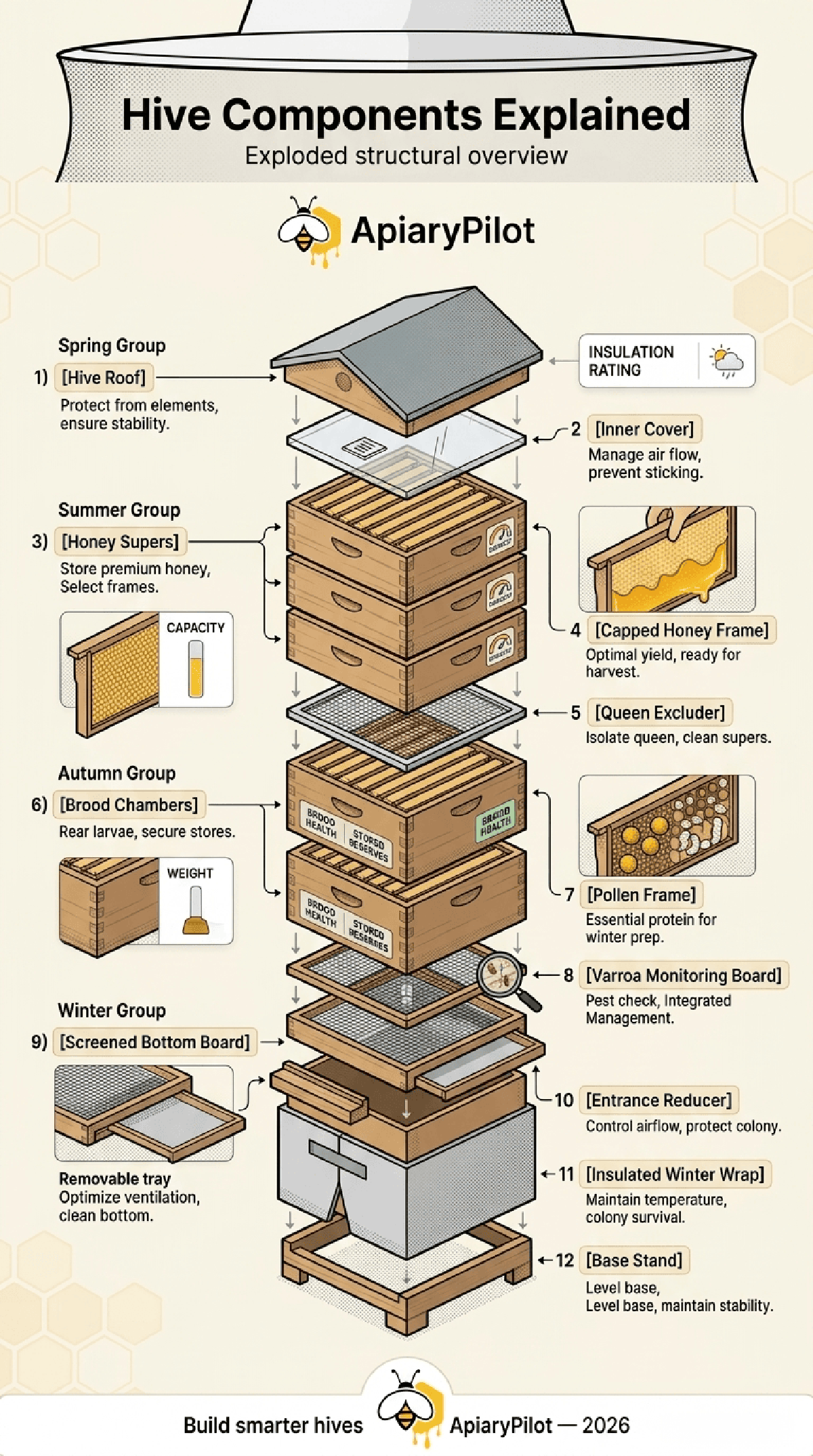
Hive Components Explained: An Exploded Structural Overview
Understand every part of your beehive — from the roof to the base stand. This exploded view breaks down 12 essential components and their seasonal roles.
About this hive components explained: an exploded structural overview infographic
This beekeeping infographic turns the key decisions behind hive components explained: an exploded structural overview into a visual reference that can be used during inspections, planning sessions, or training conversations. It is designed for practical apiary management, so each section highlights the observations, timing, and records that matter most in the field.
Use it as a quick reminder before opening colonies, preparing seasonal work, or reviewing hive notes with another beekeeper. For stronger records, keep the infographic beside your inspection journal and capture the matching hive data in ApiaryPilot, including dates, colony status, treatments, harvest actions, and follow-up tasks.
The download below is suitable for printing or sharing with a local beekeeping group. The embed code lets clubs, educators, and suppliers reference the infographic while linking back to the original ApiaryPilot guide page.
Understanding the components of your beehive is fundamental to effective colony management. Each part serves a specific purpose, and knowing how they work together helps you make better decisions about inspections, harvesting, and seasonal preparation.

Spring Group: Protection from Above
1. Hive Roof (Telescoping Cover)
The outermost layer of protection for your colony. A good roof shields bees from rain, snow, and direct sun. Look for:
- Insulation rating — metal-clad roofs reflect heat in summer
- Overhang — telescoping covers extend past the hive walls for water runoff
- Weight — heavy enough to resist wind but light enough to lift easily
2. Inner Cover
Sitting just below the roof, the inner cover creates an air buffer and prevents bees from propolizing the roof directly to the frames. It also:
- Manages air flow through the hive
- Prevents the roof from sticking
- Provides a top entrance option in some configurations
Summer Group: Honey Production
3. Honey Supers
These are the boxes where bees store surplus honey — your harvest. Key considerations:
- Capacity — add supers when existing ones are 70–80% full
- Frame selection — use drawn comb for faster filling, or foundation for new comb
- Weight management — medium supers (when full) are more manageable than deeps
4. Capped Honey Frame
A frame with fully capped honey cells is ready for harvest. Capped cells indicate the honey has been properly dehydrated by the bees to below 18% moisture content — optimal for long-term storage.
5. Queen Excluder
This metal or plastic grid sits between the brood chambers and honey supers. The gaps are sized to allow worker bees through but prevent the larger queen from laying eggs in your honey supers, keeping harvest frames clean.
Autumn Group: Brood & Stores
6. Brood Chambers
The heart of the colony where the queen lays eggs and larvae develop. In autumn, focus on:
- Brood health — look for solid, consistent brood patterns
- Stored reserves — ensure adequate honey and pollen frames for winter
- Weight — a well-provisioned deep brood box weighs 30–40 kg
7. Pollen Frame
Pollen is the colony's protein source, essential for raising brood and preparing for winter. Frames with stored pollen (bee bread) near the brood nest indicate a well-provisioned colony.
8. Varroa Monitoring Board
An integrated pest management essential. The sticky board or monitoring tray slides beneath the screened bottom board to count natural mite drop — giving you data to make treatment decisions.
Winter Group: Base & Insulation
9. Screened Bottom Board
Modern screened bottom boards provide:
- Ventilation — reduces moisture buildup in the hive
- Mite monitoring — removable tray for counting Varroa drop
- Debris removal — small hive beetles and wax moths fall through
10. Entrance Reducer
A simple but critical component for winter. Reducing the entrance:
- Controls airflow into the hive
- Makes the entrance easier for guard bees to defend
- Prevents mice and other pests from entering
11. Insulated Winter Wrap
In cold climates, wrapping hives with insulating material helps colonies maintain cluster temperature. Proper wrapping:
- Maintains internal temperature with less energy expenditure
- Reduces condensation on cold inner walls
- Improves colony survival rates by 15–25% in harsh winters
12. Base Stand (Hive Stand)
Elevating hives off the ground is essential for:
- Moisture prevention — keeps the bottom board dry
- Pest reduction — makes it harder for ants and small pests to enter
- Ergonomics — raising hives reduces back strain during inspections
- Stability — a level base prevents hive leaning and frame shifting
Assembling Your Hive
When setting up a new hive, work from the bottom up:
- Level your hive stand on firm ground
- Place the screened bottom board
- Add brood chambers with frames
- Install the queen excluder (when supers are added)
- Add honey supers as the colony grows
- Place the inner cover
- Top with the telescoping cover
Monitor Your Hive Setup with ApiaryPilot
ApiaryPilot lets you log the configuration of each hive — number of supers, equipment condition, and component changes over time. Set reminders for seasonal equipment swaps and track which configurations produce the best results across your apiary.
Ready to elevate your beekeeping?
Start tracking your hives, inspections, and harvests with ApiaryPilot — the modern hive management platform built for beekeepers like you.
Get started free