From Nuc to Boom: The Progressive Growth of a Honeybee Hive
Trace the journey of a honeybee colony from a small nucleus hive to a booming, productive colony — and learn when to add supers, split colonies, and manage expansion.
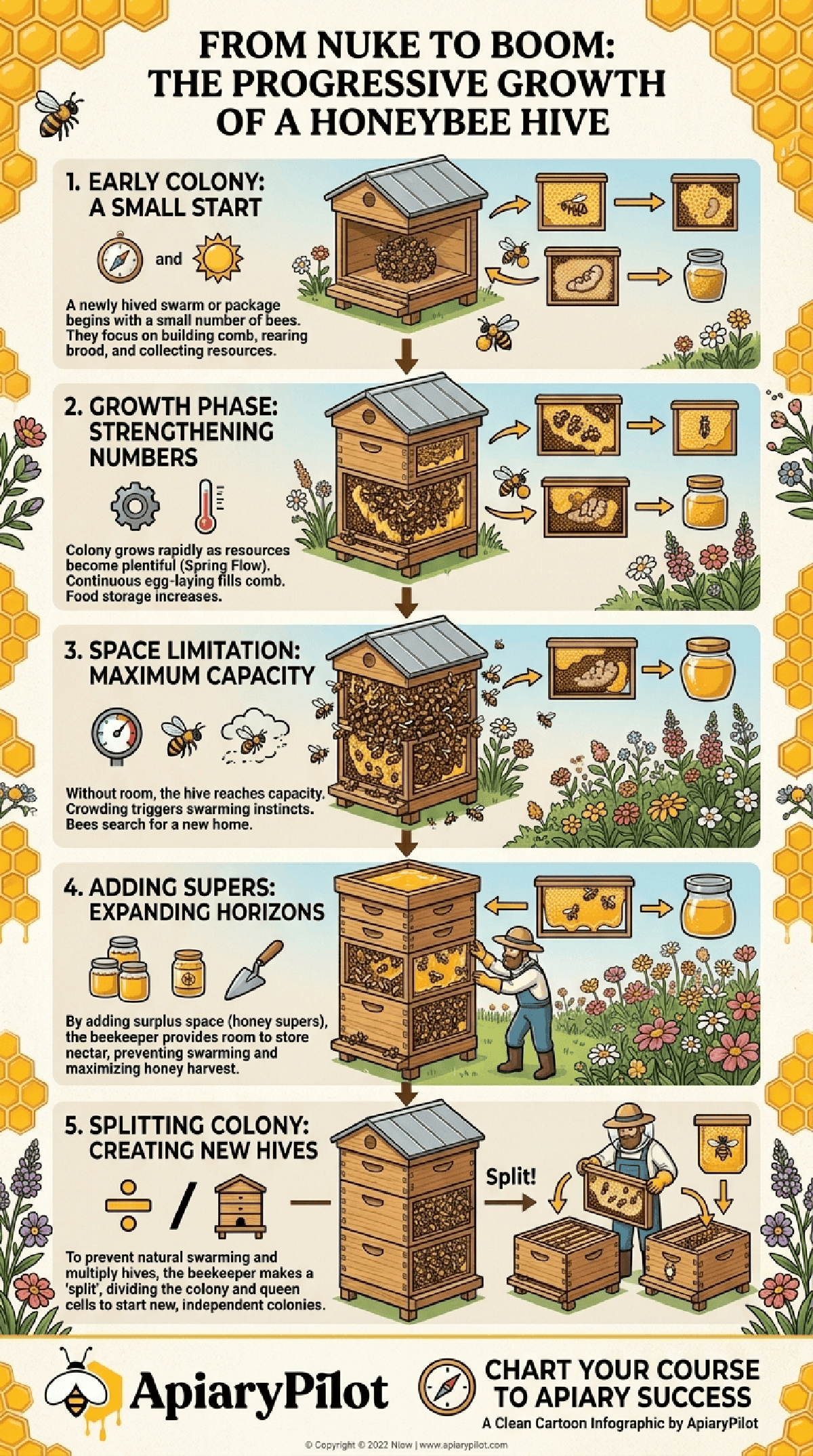
About this from nuc to boom: the progressive growth of a honeybee hive infographic
This beekeeping infographic turns the key decisions behind from nuc to boom: the progressive growth of a honeybee hive into a visual reference that can be used during inspections, planning sessions, or training conversations. It is designed for practical apiary management, so each section highlights the observations, timing, and records that matter most in the field.
Use it as a quick reminder before opening colonies, preparing seasonal work, or reviewing hive notes with another beekeeper. For stronger records, keep the infographic beside your inspection journal and capture the matching hive data in ApiaryPilot, including dates, colony status, treatments, harvest actions, and follow-up tasks.
The download below is suitable for printing or sharing with a local beekeeping group. The embed code lets clubs, educators, and suppliers reference the infographic while linking back to the original ApiaryPilot guide page.
Every thriving apiary starts with a small beginning. Whether you install a nucleus colony (nuc) or hive a captured swarm, understanding the stages of colony growth helps you provide the right support at the right time. This infographic maps the journey from a small start to a booming, productive hive.

Stage 1: Early Colony — A Small Start
A newly hived swarm or nuc package begins with a relatively small number of bees — typically 10,000–20,000 workers and a mated queen. At this stage, the colony's priorities are:
- Building comb – Drawing out foundation or building natural comb for the queen to lay in
- Rearing brood – The queen begins laying immediately, but it takes 21 days for the first new workers to emerge
- Collecting resources – Foragers bring in nectar and pollen to sustain the growing colony
During this phase, supplemental feeding with sugar syrup (1:1 ratio) helps the colony build comb faster.
Stage 2: Growth Phase — Strengthening Numbers
As spring progresses and resources become plentiful (the "Spring Flow"), the colony enters rapid growth mode:
- The queen lays up to 1,500–2,000 eggs per day
- Continuous egg-laying fills comb across multiple frames
- Food storage increases as foragers exploit blooming flowers
- The colony population can double every 3–4 weeks
This is when attentive management matters most. Regular inspections every 7–10 days help you monitor growth and anticipate needs.
Stage 3: Space Limitation — Maximum Capacity
Without intervention, a booming colony will eventually fill all available space. When the hive reaches capacity:
- Congestion triggers swarming instincts
- Bees begin building queen cells along frame bottoms
- Foragers have nowhere to store incoming nectar
- The colony prepares to split naturally
Recognizing this stage is critical — it's your cue to act before the colony swarms and you lose half your bees.
Stage 4: Adding Supers — Expanding Horizons
The beekeeper's primary tool for managing growth is adding honey supers — additional boxes placed above the brood nest. This provides:
- Surplus storage space for nectar, which the bees will ripen into honey
- Swarm prevention by relieving congestion
- Maximum honey harvest potential
Timing is everything: add supers before the colony runs out of space, not after. A good rule of thumb is to add a super when the existing one is 70–80% full.
Stage 5: Splitting the Colony — Creating New Hives
For beekeepers who want to expand their apiary or proactively prevent swarming, making a split is an essential skill:
- Divide frames of brood, bees, and resources between the original hive and a new one
- Ensure the new split has queen cells, a mated queen, or the ability to raise their own queen
- Both colonies rebuild their populations independently
Splitting turns one strong colony into two — doubling your apiary while preventing the uncontrolled loss of a swarm.
Managing Growth with ApiaryPilot
ApiaryPilot helps you track each colony's growth trajectory — from initial installation through expansion and splitting. Log population estimates, super additions, and split dates to build a complete growth history. Set reminders for inspection schedules and super checks so you never miss the critical window for expansion.
Ready to elevate your beekeeping?
Start tracking your hives, inspections, and harvests with ApiaryPilot — the modern hive management platform built for beekeepers like you.
Get started free