The Journey of Honey: From Nectar to Jar Explained Visually
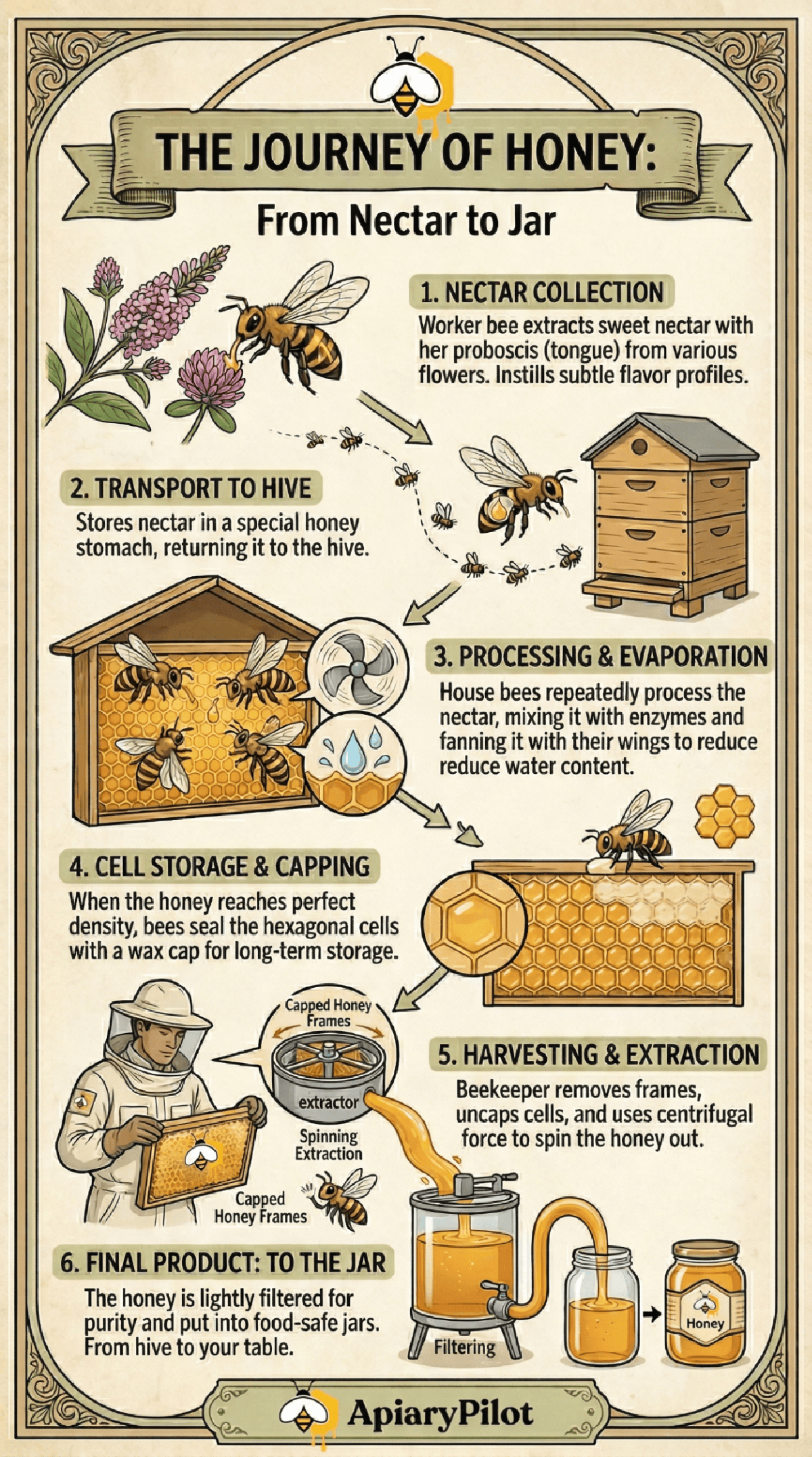
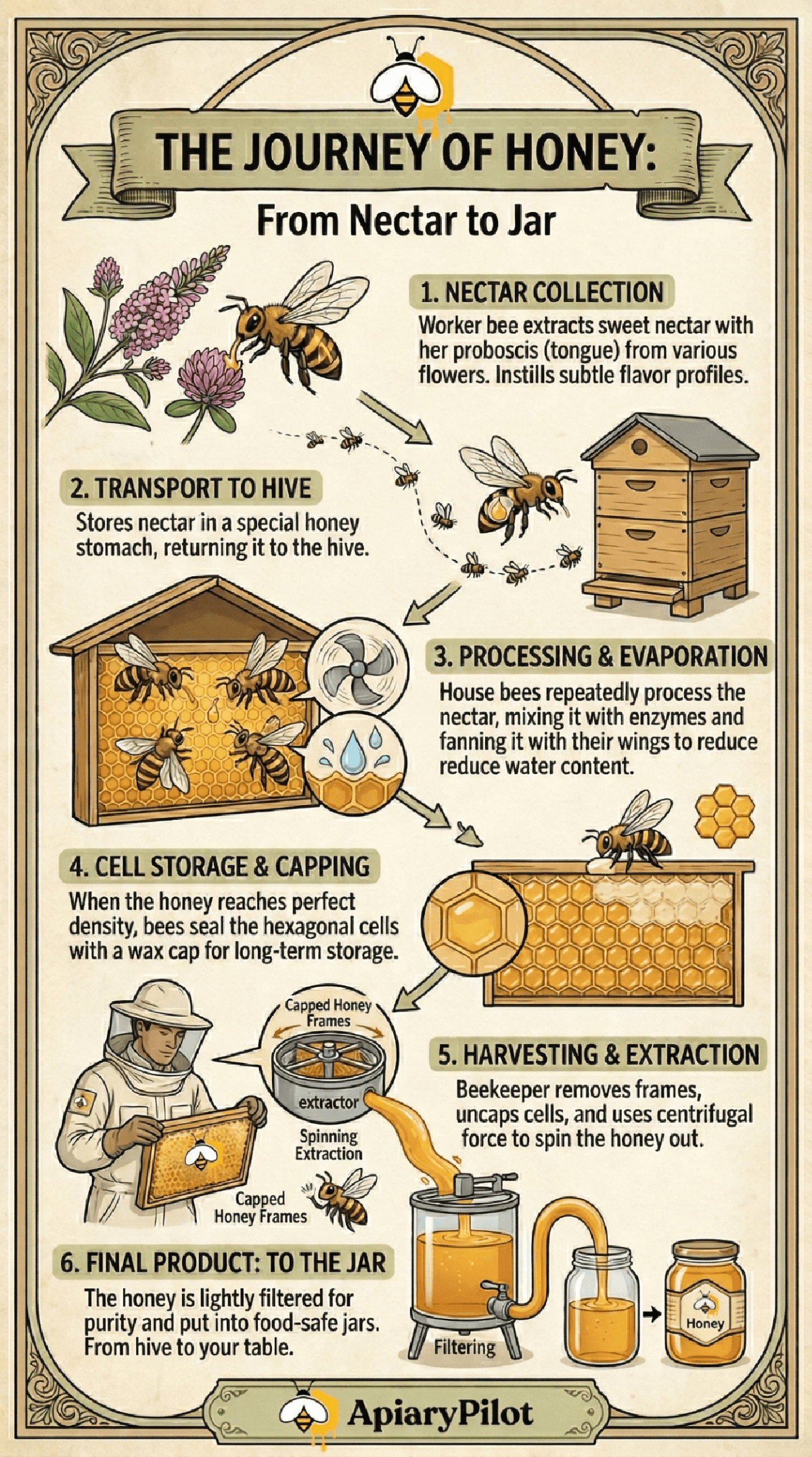
Ever wondered how bees turn flower nectar into golden honey? This illustrated infographic traces the complete honey-making process in six beautiful steps.
About this the journey of honey: from nectar to jar explained visually infographic
This beekeeping infographic turns the key decisions behind the journey of honey: from nectar to jar explained visually into a visual reference that can be used during inspections, planning sessions, or training conversations. It is designed for practical apiary management, so each section highlights the observations, timing, and records that matter most in the field.
Use it as a quick reminder before opening colonies, preparing seasonal work, or reviewing hive notes with another beekeeper. For stronger records, keep the infographic beside your inspection journal and capture the matching hive data in ApiaryPilot, including dates, colony status, treatments, harvest actions, and follow-up tasks.
The download below is suitable for printing or sharing with a local beekeeping group. The embed code lets clubs, educators, and suppliers reference the infographic while linking back to the original ApiaryPilot guide page.
Honey is one of nature's most remarkable products—a complex food created through an intricate process involving thousands of bees working in perfect coordination. This infographic traces the complete journey from a flower's nectar to the jar on your table.
What This Infographic Covers
Our illustrated guide follows a single drop of nectar through six stages of transformation, showing how bees collect, process, store, and preserve honey.

Nectar Collection
It all begins with a forager bee visiting flowers. Using her proboscis (a long, straw-like tongue), she extracts sweet nectar from blossoms. A single bee may visit hundreds of flowers on a single foraging trip. The type of flower determines the honey's flavour profile—lavender nectar produces a different honey than clover or wildflower.
Transport to the Hive
The forager stores nectar in a specialised honey stomach (separate from her digestive stomach) and flies it back to the hive. During this journey, enzymes are already beginning to break down the complex sugars in the nectar—the transformation has already started before she even arrives home.
Processing and Evaporation
Back at the hive, house bees take over. They repeatedly process the nectar, passing it mouth-to-mouth while adding more enzymes. Meanwhile, fanning bees beat their wings to create airflow across the open cells, evaporating excess water. Fresh nectar is about 70% water—it needs to drop to roughly 18% to become honey.
Cell Storage and Capping
Once the honey reaches the right density, bees seal each hexagonal cell with a thin layer of beeswax. This cap protects the honey from absorbing moisture and keeps it preserved almost indefinitely. Capped frames are the beekeeper's signal that the honey is ready for harvest.
Harvesting and Extraction
The beekeeper removes capped frames, uncaps the cells with a hot knife or uncapping fork, and places them in a centrifugal extractor. The spinning force pulls honey out of the cells without destroying the comb—which can be returned to the hive for the bees to refill.
Final Product
The extracted honey is lightly filtered to remove wax particles and debris, then poured into food-safe jars. Unlike industrial processing, small-scale beekeepers typically avoid excessive heating, which preserves the honey's natural enzymes, pollen, and flavour.
Track your entire harvest journey in ApiaryPilot—from frame weights and moisture readings to batch numbers and honey types. It's the easiest way to maintain quality records and build your brand as a producer.
Ready to elevate your beekeeping?
Start tracking your hives, inspections, and harvests with ApiaryPilot — the modern hive management platform built for beekeepers like you.
Get started free