Weather's Impact on the Apiary: Guide to Beekeeping Activities
Understand how different weather conditions affect your bees and what beekeeping activities are appropriate — from sunny foraging days to cold winter clusters.
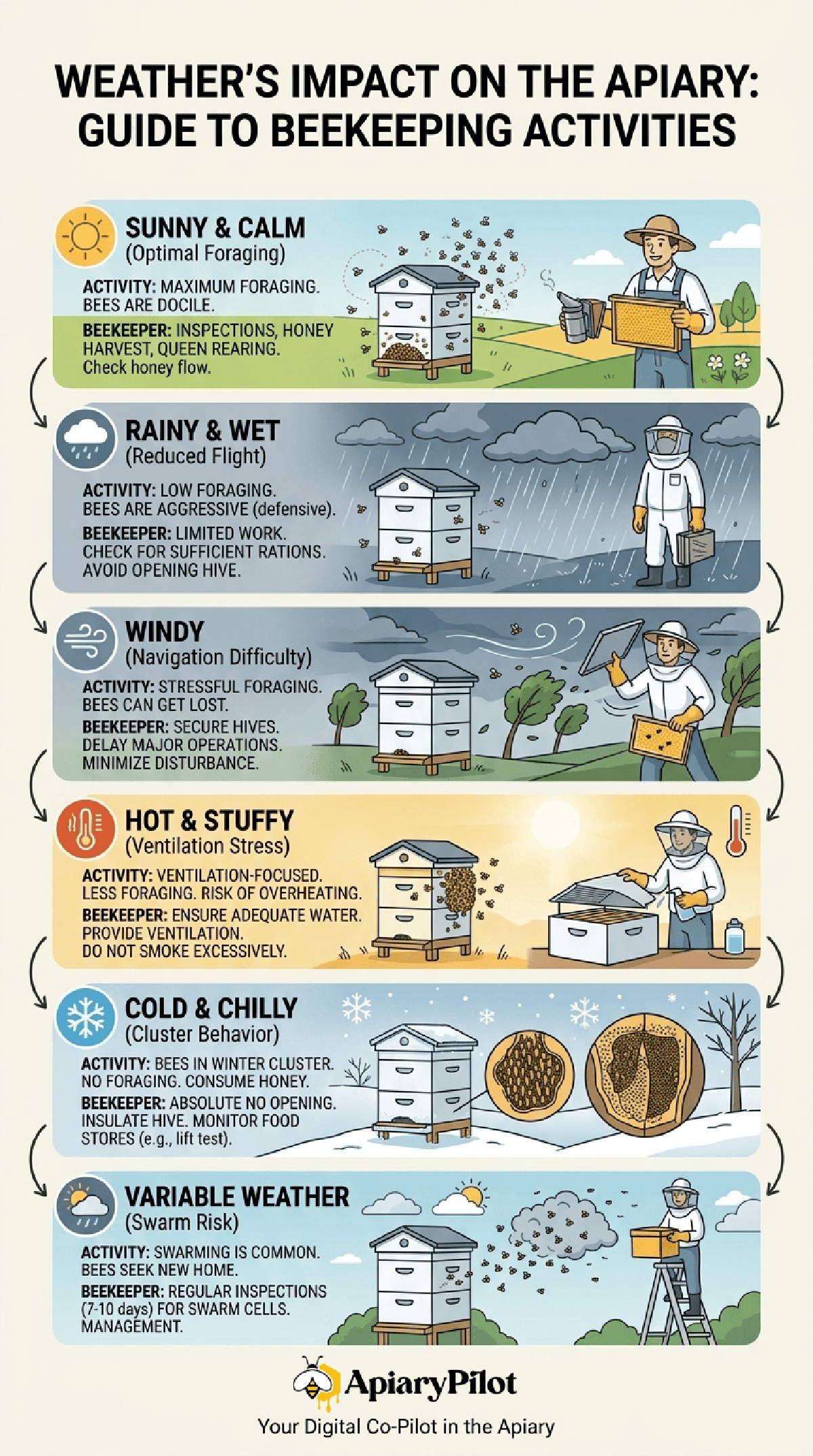
About this weather's impact on the apiary: guide to beekeeping activities infographic
This beekeeping infographic turns the key decisions behind weather's impact on the apiary: guide to beekeeping activities into a visual reference that can be used during inspections, planning sessions, or training conversations. It is designed for practical apiary management, so each section highlights the observations, timing, and records that matter most in the field.
Use it as a quick reminder before opening colonies, preparing seasonal work, or reviewing hive notes with another beekeeper. For stronger records, keep the infographic beside your inspection journal and capture the matching hive data in ApiaryPilot, including dates, colony status, treatments, harvest actions, and follow-up tasks.
The download below is suitable for printing or sharing with a local beekeeping group. The embed code lets clubs, educators, and suppliers reference the infographic while linking back to the original ApiaryPilot guide page.
Weather is one of the most significant factors affecting bee behavior and beekeeping operations. Understanding how your bees respond to different conditions helps you plan activities, protect your colonies, and maximize productivity.
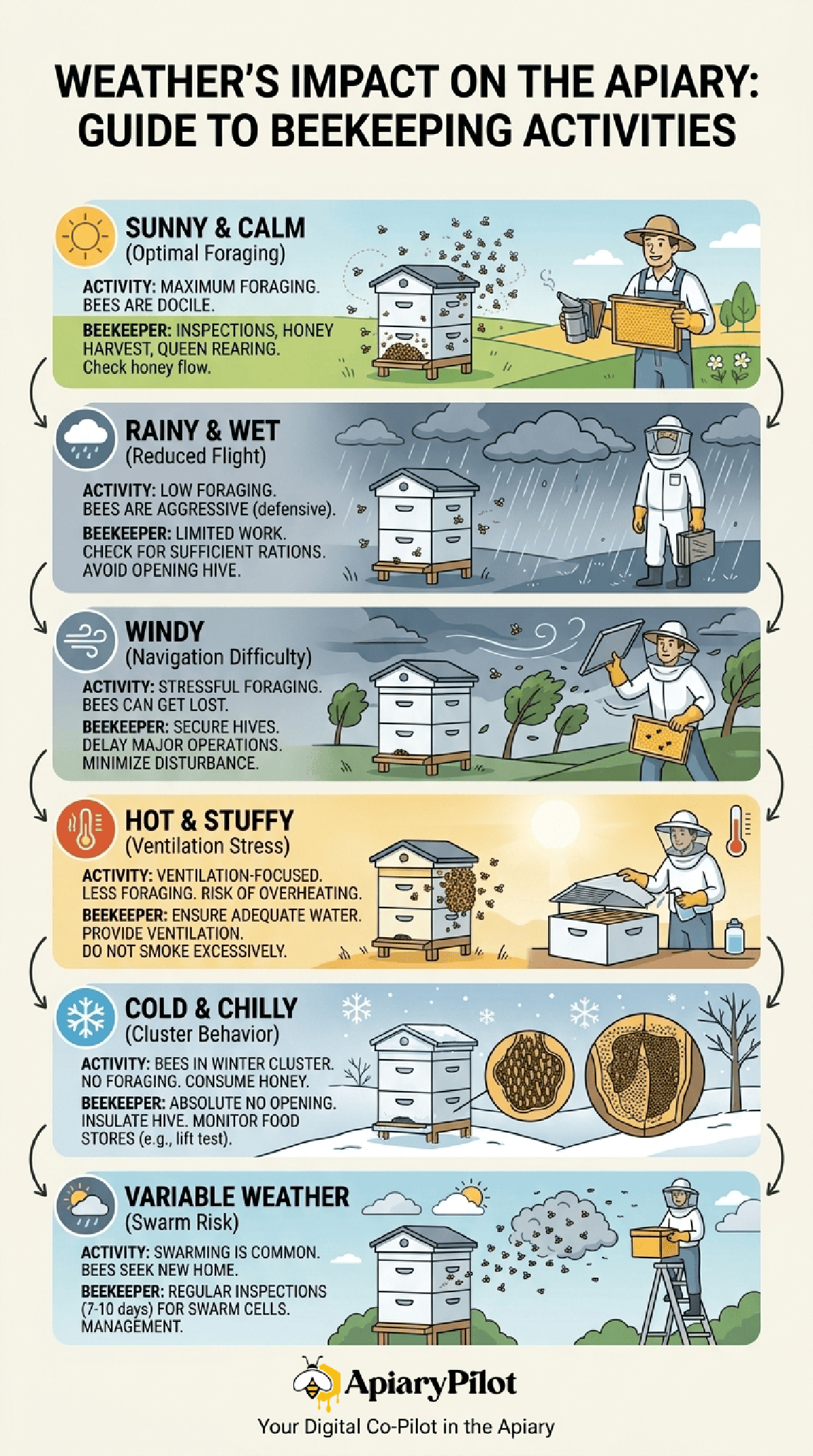
Sunny & Calm — Optimal Foraging
When the sun is shining and wind is minimal, bees are at their most productive. Foraging activity is at its maximum, and bees tend to be docile and easy to work with.
Bee Activity: Maximum foraging intensity. Bees are gentle and focused on nectar collection.
Beekeeper Actions: This is your ideal window for inspections, honey harvests, queen rearing, and checking honey flow. Take advantage of calm weather for thorough hive work.
Rainy & Wet — Reduced Flight
Rain grounds most foraging bees and can make colonies irritable. Confined bees become defensive, and prolonged wet weather can deplete food stores.
Bee Activity: Low foraging. Bees cluster inside and may be more aggressive when disturbed.
Beekeeper Actions: Limit hive work. Check that colonies have sufficient food rations. Avoid opening hives unnecessarily — wet, defensive bees make poor inspection conditions.
Windy — Navigation Difficulty
Strong winds make flight dangerous and disorienting for bees. Foraging becomes stressful, and some bees may fail to return to the hive.
Bee Activity: Stressful foraging conditions. Bees can become lost or exhausted fighting wind currents.
Beekeeper Actions: Secure hive components and ensure lids are weighted. Delay major operations. Minimize disturbance — bees are already stressed.
Hot & Stuffy — Ventilation Stress
Extreme heat forces bees to shift from foraging to temperature management. They "beard" at the entrance and fan vigorously to cool the hive interior.
Bee Activity: Ventilation-focused behavior. Less foraging. Risk of wax comb collapse and overheating brood.
Beekeeper Actions: Ensure adequate water sources nearby. Provide ventilation by propping open entrance reducers or adding ventilated inner covers. Avoid excessive smoking.
Cold & Chilly — Cluster Behavior
In cold weather, bees form a tight winter cluster around the queen, generating heat through muscle vibration. They cease foraging entirely and rely on stored honey.
Bee Activity: No foraging. Bees consume honey stores to maintain cluster temperature around 35°C (95°F) at the core.
Beekeeper Actions: Absolutely do not open hives. Insulate hive exteriors if needed. Monitor food stores using the heft/lift test — a light hive may need emergency feeding.
Variable Weather — Swarm Risk
Unpredictable spring weather with alternating warm and cool periods triggers swarming instincts. Colonies that have built up strongly may decide conditions are right to split.
Bee Activity: Swarming is common. Scout bees search for new home sites during warm windows between weather changes.
Beekeeper Actions: Conduct regular inspections every 7–10 days during swarm season. Check for queen cells, provide adequate space, and consider preemptive splits for strong colonies.

Planning Around Weather
The best beekeepers are also amateur meteorologists. Keep a weather journal alongside your hive records — over time, you'll develop an intuitive understanding of how your local conditions affect your bees. Apps like ApiaryPilot can help you track weather data alongside inspection notes for a complete picture.
Ready to elevate your beekeeping?
Start tracking your hives, inspections, and harvests with ApiaryPilot — the modern hive management platform built for beekeepers like you.
Get started free