Year in the Apiary: A Beekeeper's Month-by-Month Journey
A complete visual calendar of what every beekeeper should be doing each month — from spring hive assessments to winter planning and equipment prep.
About this year in the apiary: a beekeeper's month-by-month journey infographic
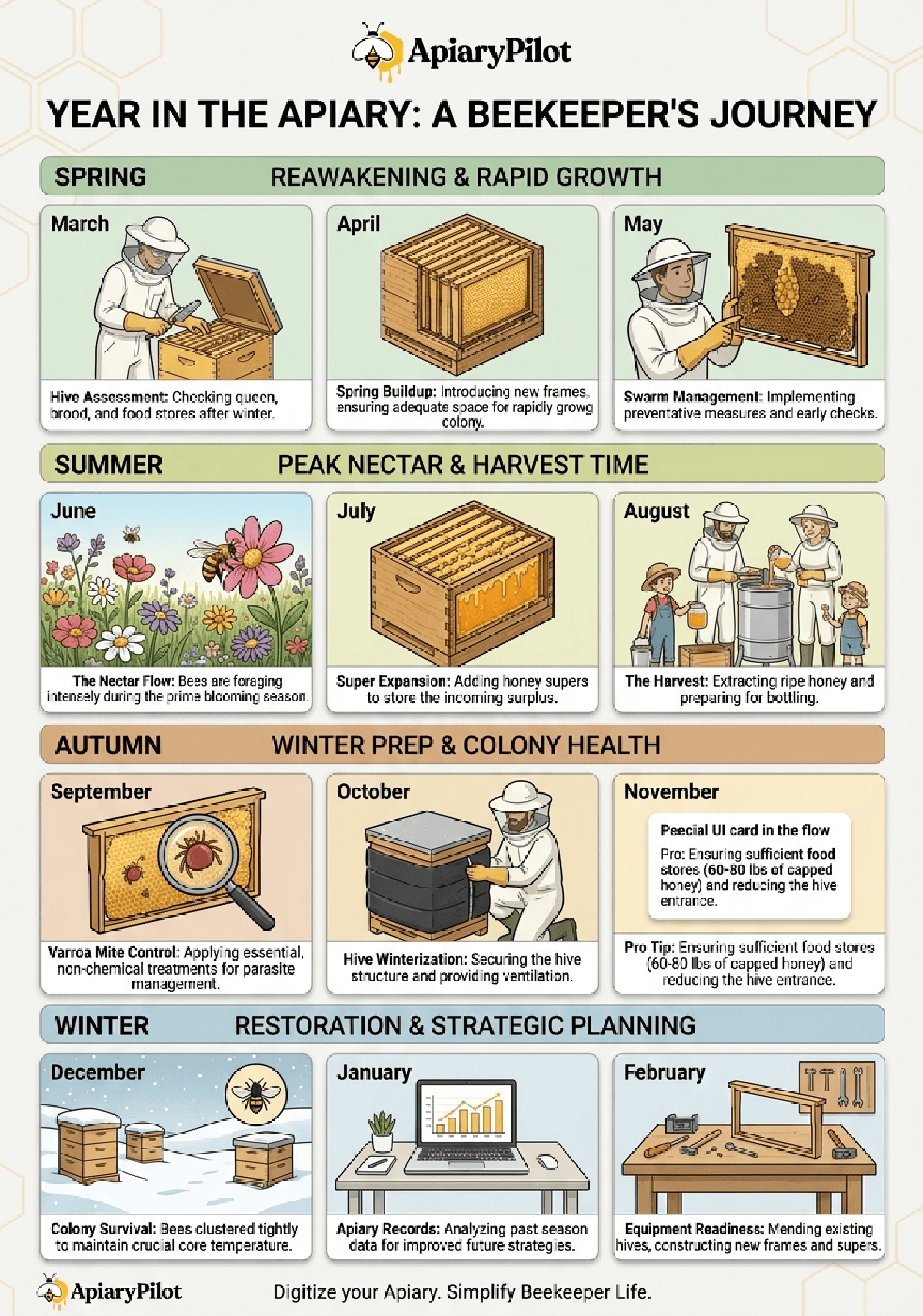
This beekeeping infographic turns the key decisions behind year in the apiary: a beekeeper's month-by-month journey into a visual reference that can be used during inspections, planning sessions, or training conversations. It is designed for practical apiary management, so each section highlights the observations, timing, and records that matter most in the field.
Use it as a quick reminder before opening colonies, preparing seasonal work, or reviewing hive notes with another beekeeper. For stronger records, keep the infographic beside your inspection journal and capture the matching hive data in ApiaryPilot, including dates, colony status, treatments, harvest actions, and follow-up tasks.
The download below is suitable for printing or sharing with a local beekeeping group. The embed code lets clubs, educators, and suppliers reference the infographic while linking back to the original ApiaryPilot guide page.
Beekeeping is a year-round commitment. Each season brings its own set of tasks, challenges, and rewards. This visual guide walks you through every month of the beekeeping calendar so you never miss a critical step.
Spring: Reawakening & Rapid Growth
March — Hive Assessment The season begins with your first inspection. Check for a healthy queen, evaluate brood patterns, and assess remaining food stores after winter. This sets the tone for the entire year.
April — Spring Buildup Introduce new frames to give the rapidly growing colony room to expand. Ensuring adequate space prevents overcrowding and reduces swarming pressure.
May — Swarm Management Implement preventative measures and perform early checks for swarm cells. Catching swarm preparations early saves colonies and maximizes your spring buildup.
Summer: Peak Nectar & Harvest Time
June — The Nectar Flow Bees are foraging intensely during the prime blooming season. Monitor hive weight and ensure supers are in place to capture the incoming nectar.
July — Super Expansion Add honey supers as needed to store the surplus. A strong colony can fill a super surprisingly fast during peak flow — don't let them run out of space.
August — The Harvest Extract ripe honey when frames are at least 80% capped. This is the most rewarding month for many beekeepers — the literal fruits of your labor.
Autumn: Winter Prep & Colony Health
September — Varroa Mite Control Apply essential treatments for parasite management. Post-harvest is the ideal window for mite treatments, as it protects the critical winter bees being raised now.
October — Hive Winterization Secure the hive structure, provide adequate ventilation, and reduce entrances. Proper winterization is the single biggest factor in winter survival rates.
November — Food Store Check Ensure sufficient food stores (60–80 lbs of capped honey) and reduce the hive entrance further. A well-fed colony going into winter has dramatically higher survival rates.
Winter: Restoration & Strategic Planning
December — Colony Survival Bees cluster tightly to maintain crucial core temperature. Resist the urge to open hives — your job now is to monitor externally and protect against wind and moisture.
January — Apiary Records Analyze past season data for improved future strategies. This is the perfect time to review your ApiaryPilot records, identify trends, and plan improvements.
February — Equipment Readiness Mend existing hives, construct new frames and supers, and order supplies. Being fully prepared before spring arrives means you can focus entirely on your bees.

Plan Your Year with ApiaryPilot
Tracking seasonal tasks across multiple hives and apiaries can be overwhelming. ApiaryPilot's task management and inspection logging tools help you stay on top of every monthly milestone — so nothing falls through the cracks.
Ready to elevate your beekeeping?
Start tracking your hives, inspections, and harvests with ApiaryPilot — the modern hive management platform built for beekeepers like you.
Get started free