Infographic · · 6 min read
Seasonal Beekeeping Tasks: What to Do and When
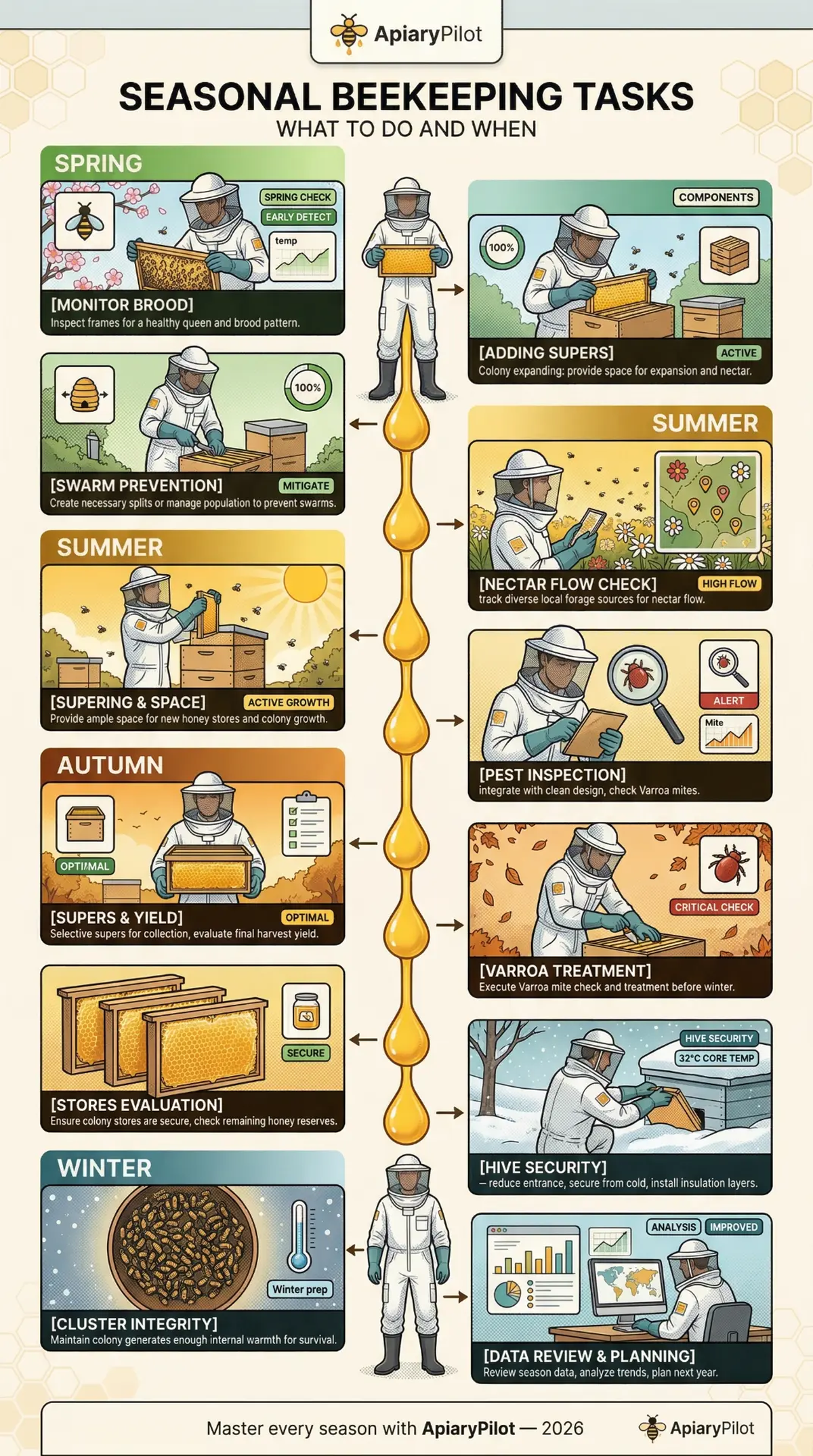
A full-year visual roadmap of apiary work — spring brood monitoring and swarm prevention, summer supering and pest checks, autumn harvest and Varroa treatment, winter security and data review.
Beekeeping is a sequence, not a set of isolated jobs. Miss supering by two weeks and you get a swarm; miss autumn Varroa treatment and you lose the colony in February. This infographic lays out the year as a single flow so you can see how each task sets up the next one.
Spring: Build the Colony
Monitor Brood
The first thorough inspection of the year is diagnostic. Look for a laying queen, a compact brood pattern spanning eggs, larvae and capped brood, and adequate stores. A patchy pattern this early is a warning worth acting on while there is still time to requeen.
Swarm Prevention
Once colonies are expanding fast, the clock starts. Inspect every 7–9 days for queen cells, and manage congestion through splits, comb rotation, or artificial swarm methods. Prevention is cheap; recovery from a swarm costs you the season's surplus.
Adding Supers
Give space before the bees ask for it. A colony that fills the brood box and finds nowhere to put nectar will convert that pressure into swarm preparation within days.
Summer: Manage the Flow
Nectar Flow Check
Track what is blooming within roughly 3 km of the apiary. Knowing whether you are in a flow, a gap, or a dearth changes every decision — whether to add supers, whether to feed, and whether robbing pressure is likely.
Supering and Space
Keep at least one super ahead of the bees during a strong flow. Stack early, and check capping progress rather than assuming weight equals ripeness.
Pest Inspection
Mid-summer is when Varroa populations accelerate. Run alcohol washes or sugar rolls on a fixed schedule rather than by feel, and treat as soon as thresholds are crossed — not after the harvest is off if that means waiting weeks.
Autumn: Harvest and Prepare
Supers and Yield
Take the surplus, leave the winter stores. Assess each hive individually: a strong producer and a late-built split need very different decisions.
Varroa Treatment
This is the single most important date in the calendar. Winter bees are raised in late summer and early autumn; if they are raised on mite-infested brood, they will not survive to spring regardless of how much honey you leave.
Stores Evaluation
Heft or weigh every hive. Feed syrup while temperatures still allow the bees to process and cap it — late fondant is a rescue, not a plan.
Winter: Protect and Review
Hive Security
Reduce entrances, fit mouse guards, secure roofs against wind, and add insulation above the cluster while keeping ventilation adequate. Damp kills more colonies than cold.
Cluster Integrity
The cluster maintains roughly 32 °C at its core when brood is present. Every unnecessary opening costs energy. Monitor from outside: heft, entrance activity on mild days, and a quiet ear against the side.
Data Review and Planning
Winter is the analysis season. Compare yields, treatment timings, queen ages, and losses across hives. The patterns you find now shape next year's plan.
Turn the Calendar into Action
ApiaryPilot's smart seasonal calendar generates task suggestions from your apiary location and colony strength, with the reasoning shown for each one — so the year-round flow in this infographic becomes a working checklist tied to your own hives rather than a generic poster.
Using this infographic
Keep it beside your inspection journal, print it for your club, or pin it in the honey room. Record the matching observations, treatments and follow-up tasks for each hive in ApiaryPilot.


