Infographic · · 4 min read
Types of Hive Feeders: Choosing the Right System
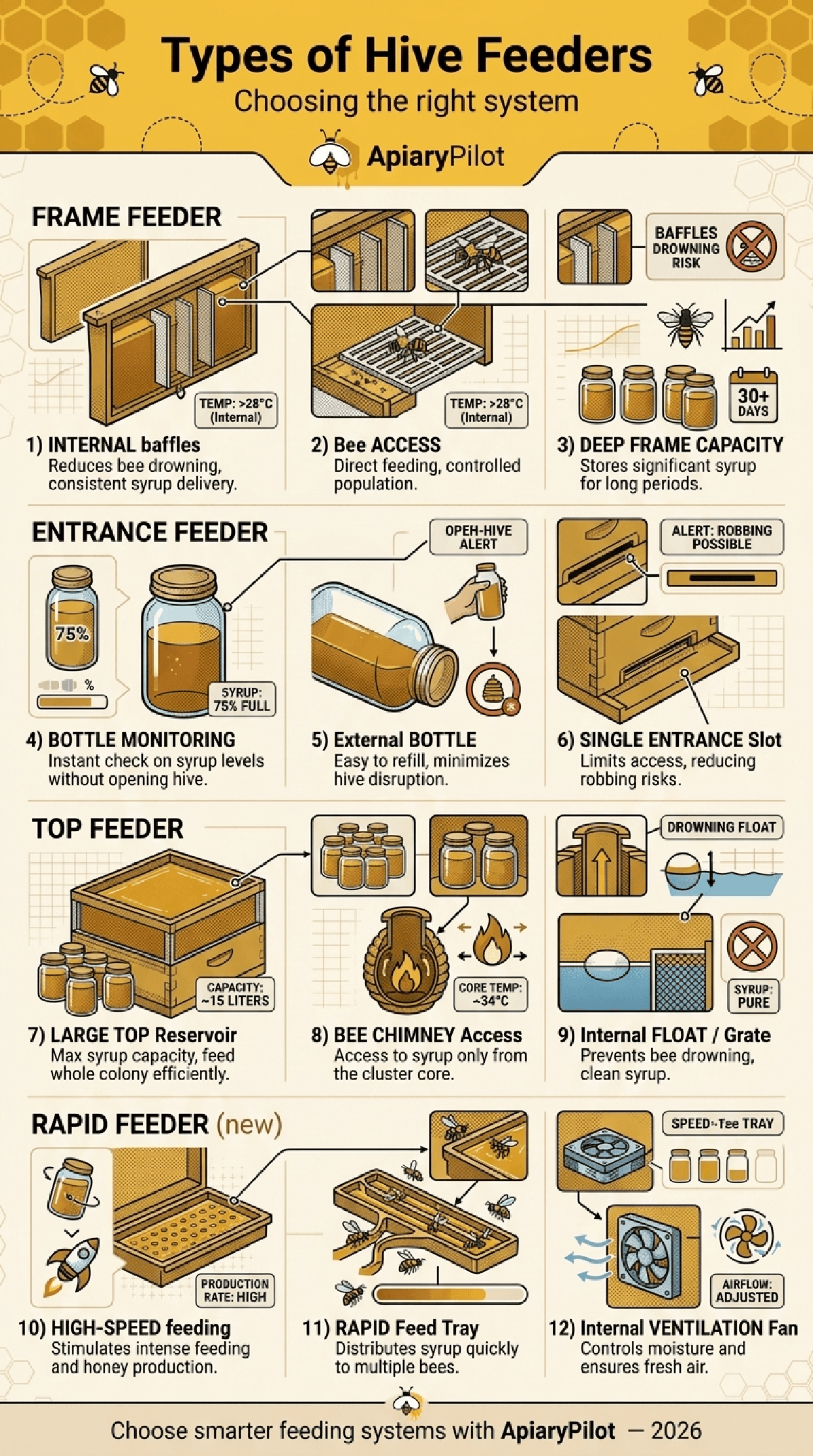
Frame, entrance, top, and rapid feeders each have a place in the apiary. Compare capacity, robbing risk, drowning protection, and best-use scenarios at a glance.
Feeding bees is rarely a one-size-fits-all decision. The right feeder depends on the season, the colony's strength, the volume of syrup you need to deliver, and the level of robbing pressure in your apiary. This infographic compares the four feeder types every beekeeper should know.
Frame Feeder
A frame feeder slots directly into the brood box in place of one or two frames, putting syrup right inside the cluster. Internal baffles or floats reduce drowning, and the deep capacity stores significant volume for long feeding runs.
Best for: - Stimulative spring feeding when warmth around the cluster matters - Long, slow feeds that can stretch over 30+ days - Internal hive temperatures above 28°C, where bees readily access the syrup
Watch for: drowning if the float or baffle is missing, and the need to open the hive every refill — disruptive during dearth.
Entrance Feeder (Boardman)
The entrance feeder is an inverted bottle that slides into the hive entrance. It's cheap, convenient, and lets you check syrup levels without opening the hive — but it sits in the most contested real estate of the colony.
Best for: - Small nucleus colonies and quick top-ups - Visual monitoring of syrup levels (e.g., a 75%-full bottle is easy to spot) - Beekeepers who want minimal hive disruption between refills
Watch for: robbing pressure. The single entrance slot helps somewhat, but external syrup is an irresistible signal during dearth — use only on strong colonies and never in the middle of the day.
Top Feeder
A top feeder sits above the brood box under the outer cover and can hold up to ~15 litres of syrup — by far the largest capacity of the common feeders. A bee chimney lets workers up into the syrup chamber, while an internal float or grate prevents drowning and keeps the syrup clean.
Best for: - Heavy autumn feeding to build winter stores - Strong colonies that can handle large volumes quickly - Cluster-core temperatures around 34°C, where bees ascend reliably to feed
Watch for: weight (a full top feeder is heavy) and ensuring the float stays above the syrup so bees don't drown.
Rapid Feeder
A rapid feeder uses a shallow tray or ribbed surface to spread syrup over a large area, letting many bees feed simultaneously. Some modern designs add ventilation fans or speed-tray geometry to push intake rates higher.
Best for: - Last-minute autumn store-building when the calendar is tight - Stimulating intense feeding ahead of a managed honey flow - Apiaries where rapid throughput beats long, slow feeding
Watch for: moisture and airflow inside the hive — high-volume feeding can spike humidity, which is why some rapid feeders include ventilation control.
Choosing the Right Feeder
| Need | Best Feeder |
|---|---|
| Stimulative spring feed | Frame feeder |
| Small nuc top-up | Entrance feeder |
| Bulk autumn stores | Top feeder |
| Fast pre-flow boost | Rapid feeder |
| Lowest robbing risk | Top or frame feeder (internal) |
| Easiest level monitoring | Entrance feeder |
Log Every Feed in ApiaryPilot
Tracking what you fed, when, and how much matters as much as the feeder choice itself. Logging feeds in ApiaryPilot lets you correlate intake with weather, hive weight, and spring buildup — and prevents the classic mistake of overfeeding into a strong nectar flow.
Using this infographic
Keep it beside your inspection journal, print it for your club, or pin it in the honey room. Record the matching observations, treatments and follow-up tasks for each hive in ApiaryPilot.


